Aggregate Delivery for Roads and Driveways
Aggregate Delivery for Roads and Diveways
Rock Hauling in Bevier for gravel roads needing resurfacing and properties with deteriorating driveways
Gravel roads and driveways in rural Missouri degrade quickly under freeze-thaw cycles and heavy rainfall, leaving ruts, washouts, and exposed soil that turn muddy after every storm. McDowell Excavating, LLC provides rock hauling services in Bevier and Macon, bringing the volume and grade of aggregate needed to rebuild driving surfaces that drain properly and hold up to daily use. When your driveway develops potholes deep enough to scrape undercarriages or your farm road becomes impassable after spring rains, the solution involves more than dumping a few loads of gravel.
Rock hauling means sourcing the correct aggregate size and type for the specific application, then delivering it in quantities that allow proper grading and compaction. Road base material differs from decorative landscaping rock in particle size distribution, angularity, and how it locks together under weight. The process requires coordination between quarry availability, hauling capacity, and the timing of your grading equipment so material gets spread and compacted before weather conditions shift.
Schedule a site visit to determine the volume of rock needed based on current surface conditions and intended traffic load.
What Proper Rock Hauling Involves
The hauling process begins with evaluating the surface area, existing base condition, and how the site drains after heavy rain. Choosing the wrong rock size creates problems: oversized aggregate leaves voids that allow shifting and rutting, while undersized material compacts into an impermeable layer that traps water and accelerates freeze damage. McDowell Excavating, LLC matches aggregate type to the load requirements, whether you're rebuilding a residential driveway that handles passenger vehicles or reinforcing a farm lane that supports loaded grain trucks during harvest.
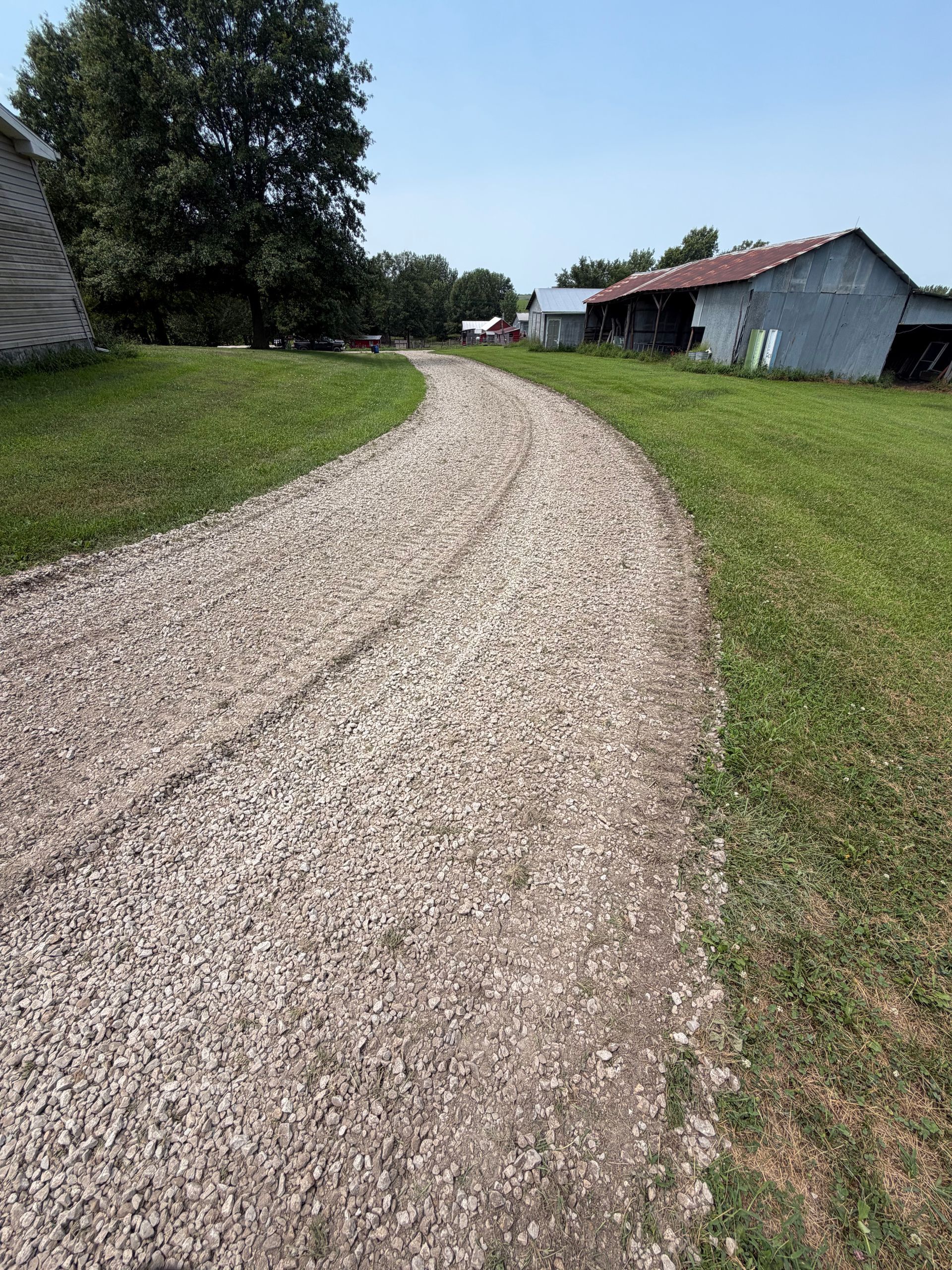
After rock is delivered and spread, you'll notice water sheets across the surface instead of pooling in depressions, and tires stay on top of the compacted base rather than sinking into soft spots. The surface remains firm in wet conditions, and you won't see the rutting patterns that develop when aggregate lacks proper gradation or depth. Proper installation eliminates the cycle of filling potholes every few months only to watch them reappear after the next heavy rain.
Rock hauling also involves planning delivery logistics around site access, especially for rural properties where turning radius and ground conditions limit where trucks can unload. Timing deliveries to coincide with dry weather allows immediate spreading and compaction, preventing material from becoming embedded in mud before it reaches its intended location.
Common Questions About This Service
Property owners in Bevier and Macon often need clarity on material selection, delivery logistics, and maintenance expectations before arranging rock hauling.
What type of rock works best for a residential driveway?
Crushed limestone or chat in three-quarter-inch to two-inch sizes provides the angularity and gradation needed for a stable surface that compacts well and handles typical vehicle traffic without excessive dust.
How much rock is needed to rebuild a gravel driveway?
A standard single-lane driveway measuring twelve feet wide and two hundred feet long requires approximately thirty to forty tons of aggregate for a four-inch compacted base, though exact volume depends on how much existing material remains and whether the subgrade needs repair.
When is the best time to schedule rock delivery?
Late spring through early fall offers the driest ground conditions for hauling and spreading, allowing trucks to access sites without creating ruts and enabling immediate grading before rain events.
Why do some gravel driveways develop ruts while others stay firm?
Ruts form when aggregate lacks proper gradation or depth, when the base wasn't compacted during installation, or when drainage patterns concentrate water flow across the driving surface instead of directing it to ditches.
What happens if rock is delivered during wet conditions?
Hauling during wet weather risks trucks getting stuck, material becoming contaminated with mud, and creating deep ruts in the access route that require additional repair work before grading can proceed.
McDowell Excavating, LLC coordinates material sourcing and delivery timing to match your project schedule and site conditions. Contact the company to discuss aggregate options and arrange delivery based on current access conditions.